
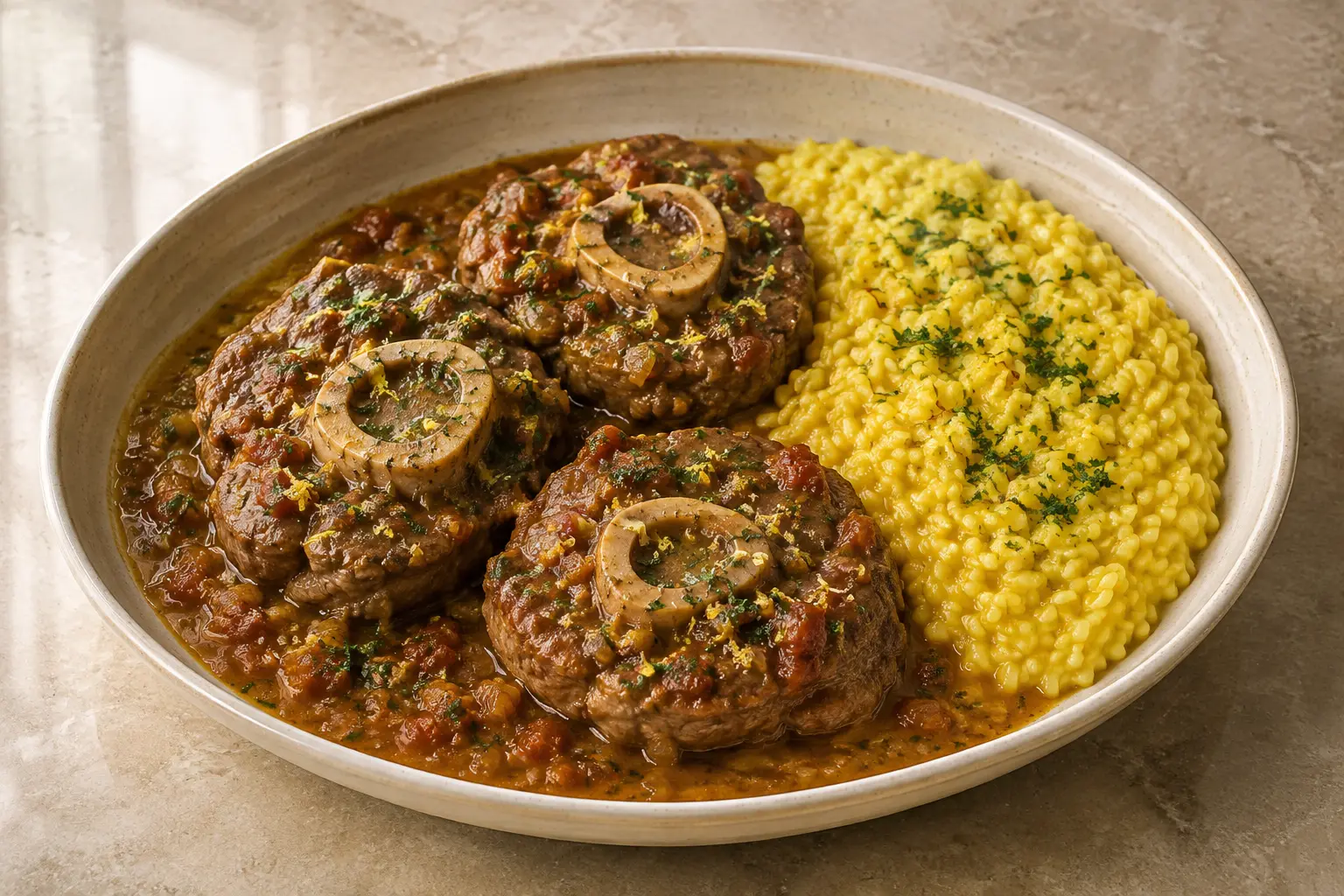
Step by step
Method
8 steps- 01
Tie kitchen string around each shank so it holds its shape. Pat dry, season and dust lightly with flour, shaking off every loose patch.
- 02
Heat oil and butter in a wide, heavy casserole. Brown shanks in batches for 4–5 minutes per side until deeply coloured; transfer to a plate.
- 03
Lower heat and cook onion, carrot and celery for 10 minutes until sweet and soft. Add garlic for 1 minute.
- 04
Pour in wine and boil for 4 minutes, scraping up the caramelized fond. Add tomatoes, stock, bay and thyme, then return the shanks in a snug single layer.
- 05
Bring to a simmer, cover and transfer to a 160°C oven for 90 minutes. Turn the shanks carefully, uncover and cook 25–35 minutes more until fork-tender but still intact.
- 06
Move shanks to a warm platter. Remove herbs and simmer the sauce for 8–12 minutes until glossy; skim excess fat and correct the seasoning.
- 07
For gremolata, mix lemon zest, garlic and parsley immediately before serving. Remove the strings, spoon sauce around the shanks and scatter gremolata over the top.
- 08
Serve with saffron risotto, making sure each plate receives some marrow and plenty of aromatic sauce.
Cook's notes
Make it excellent
- Choose evenly thick centre-cut shanks so all four become tender at the same time.
- A gentle oven braise protects the meat’s shape better than a hard stovetop simmer.
- Add gremolata only at the end; cooking it would dull the fresh lemon and parsley.
Serve it with
Risotto alla Milanese, soft polenta or mashed potatoes and simply dressed bitter leaves.
Store & reheat
Refrigerate the braise for up to 3 days; it improves overnight. Reheat covered at 160°C and make gremolata fresh.

Helpful cooking questions and genuine results are welcome.